Learn more about RoofMaxx roof restoration, how the treatment works, roof qualifications, warranty information, and what homeowners can expect throughout the process.
As asphalt shingles age, they begin losing the natural oils that help maintain flexibility and waterproofing protection. Common signs of roof aging may include:
Aging shingles do not always mean your roof requires immediate replacement. RoofMaxx restoration may help extend the life of qualifying roofs.
RoofMaxx uses a plant-based treatment designed to restore flexibility to aging asphalt shingles. The treatment penetrates the shingles to help replenish lost oils and improve overall roof performance.
This process helps many homeowners delay costly roof replacement while protecting their existing roof system.
Yes. RoofMaxx uses a safe, plant-based formula that is environmentally friendly and designed specifically for asphalt shingle restoration.
The treatment is safe for people, pets, and landscaping when professionally applied.
RoofMaxx includes a limited warranty designed to support qualifying treated roofs. Warranty coverage varies depending on roof condition, age, and treatment history.
Our team will review warranty details and expectations during your roof assessment.
Results vary depending on roof condition and environmental exposure, but many homeowners gain several additional years of roof life after treatment.
Some roofs may qualify for additional treatments over time to further extend performance.
RoofMaxx is designed to restore flexibility and performance rather than dramatically alter roof appearance. While some roofs may appear refreshed after treatment, the primary goal is extending roof life and improving shingle condition.
Moss, algae, and debris buildup can impact roof performance and should typically be addressed before treatment. During your assessment, our team will evaluate the roof condition and recommend any necessary preparation steps.
No. RoofMaxx is designed for qualifying asphalt shingle roofs that are structurally sound. Roofs with severe structural damage, extensive deterioration, or certain roofing conditions may not qualify.
Our free roof assessment helps determine whether restoration is the right fit for your roof.
Our team performs a detailed roof evaluation to determine whether your roof is a good candidate for RoofMaxx restoration treatment.
We assess:
No. RoofMaxx is designed to help delay premature roof replacement by restoring flexibility and performance to qualifying asphalt roofs.
If a roof no longer qualifies for restoration, our team will provide honest guidance on the next best step.
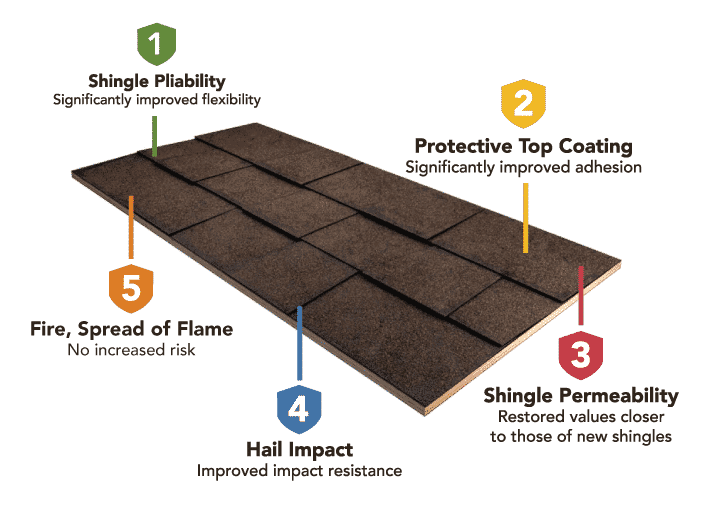
RoofMaxx technology has undergone independent testing focused on asphalt shingle flexibility, durability, and overall performance.
The Roof Maxx® treatment seeps into dried out shingles and rehydrates the asphalt with essential oil beads. This process restores flexibility so the shingle can contract and expand without breaking while reactivating the seal tabs on the shingles helping to extend the waterproofing protection. Similar to the soy technology used in Good Year tires, Roof Maxx® is a bio-solution product that was created in coordination with the Ohio Soybean Council. The Ohio State University conducted a study combining with research from Battelle Memorial Institute and PRI Construction Materials Technology and found that Roof Maxx® treated shingles restored flexibility, durability, and permeability values close to that of a brand new shingle.
“Roof Maxx restored the flexibility of 17-year old roof shingles, successfully passing the same materials testing required for new roof shingles.”